
Drug-facilitated sexual assault remains a serious concern, and the substances used to incapacitate victims have evolved. Understanding the clinical profiles of GHB, ketamine, and scopolamine—three of the most commonly implicated date rape drugs—helps you recognize date rape drugs symptoms and take practical steps to protect yourself. This article provides a medically grounded overview of how these substances work, their effects, and why multi-drug detection matters.
TL;DR: GHB is a fast-clearing GABA agonist (detectable in urine for up to about 12 hours) whose main danger is respiratory depression. Ketamine is an NMDA-blocking dissociative that can cause immobility and amnesia (the “K-hole”). Scopolamine causes suggestibility and amnesia — but only via oral ingestion; the “blown in the face” story is a myth. Because perpetrators use different substances, multi-drug testing of your drink before you consume it is the practical defense.
GHB: GABA Agonist and Respiratory Risk

Gamma-hydroxybutyric acid (GHB) is a central nervous system depressant that acts primarily as a GABAB receptor agonist. It enhances inhibitory neurotransmission, producing sedation, euphoria, and muscle relaxation. In recreational or predatory contexts, it is often added to drinks as a colorless, odorless liquid or in powder form.
Key clinical characteristics:
- Mechanism: Binds to GABA receptors, mimicking the brain’s main inhibitory neurotransmitter.
- Effects: Drowsiness, dizziness, confusion, loss of coordination, nausea, and in higher doses, respiratory depression—a potentially life-threatening effect.
- Detection window: GHB is metabolized quickly. It is detectable in urine for up to about 12 hours after ingestion (UK ACMD report on drug-facilitated sexual assault; EUDA thematic paper on GHB). Blood detection windows are shorter (up to about 6 hours), making timely testing critical.
Because GHB is rapidly cleared from the body, recognizing date rape drugs symptoms early and seeking medical attention—or testing your drink before consumption—is essential. GHB overdose can progress to coma and respiratory failure.
Ketamine: NMDA Antagonist and Dissociative Effects
Ketamine is a dissociative anesthetic that blocks NMDA (N-methyl-D-aspartate) receptors in the brain. Originally developed for surgical anesthesia, it is sometimes used to facilitate assault due to its ability to induce immobility, confusion, and amnesia.
Key clinical characteristics:
- Mechanism: NMDA receptor antagonist; disrupts normal perception and motor control.
- Effects: Dissociation (“out-of-body” feeling), K-hole (intense dissociative state with hallucinations), confusion, slurred speech, immobility, and amnesia for events during intoxication.
- Detection: Ketamine and its metabolite norketamine can be detected in urine for several days, but the window for blood detection is shorter.
The K-hole experience—characterized by vivid hallucinations, altered sense of time, and inability to move or communicate—makes victims highly vulnerable. Recognizing date rape drugs symptoms such as sudden dissociation, numbness, or inability to stand can prompt immediate help-seeking.
Scopolamine (Devil’s Breath): Anticholinergic and Myth vs. Reality

Scopolamine is an anticholinergic compound derived from plants in the Brugmansia and Datura genera. It has gained notoriety as “Devil’s Breath” in media and true crime narratives, often with exaggerated claims about how it is administered.
Key clinical characteristics:
- Mechanism: Anticholinergic—blocks muscarinic acetylcholine receptors, leading to blurred vision, dry mouth, confusion, and amnesia.
- Effects: Dilated pupils, dry mouth, disorientation, suggestibility, and anterograde amnesia (inability to form new memories). In higher doses, it can cause hallucinations, agitation, and dangerous heart rate changes.
- Myth vs. reality: A persistent myth suggests scopolamine can be “blown in the face” or absorbed through skin contact to incapacitate someone. This is not supported by evidence. Effective incapacitation requires oral ingestion—typically via contaminated food or drink. The compound must enter the bloodstream through the gastrointestinal tract to produce significant effects.
Understanding this distinction matters: drink and food safety, not fear of airborne exposure, should be the focus. Testing drinks before consumption remains a practical defense against scopolamine-facilitated assault.
Comparison: Detection Windows, Onset, and Key Facts
| Substance | Urine Detection Window | Blood Detection | Typical Onset | Key Risk |
|---|---|---|---|---|
| GHB | Up to about 12 hours | Up to about 6 hours | 15–30 min | Respiratory depression |
| Ketamine | Several days (norketamine) | Shorter | 5–15 min | K-hole, immobility |
| Scopolamine | Varies | Varies | 15–30 min | Amnesia, suggestibility |
Because GHB leaves the body quickly, testing your drink before consumption—or seeking medical help immediately if you suspect exposure—is critical. For visual warning signs to watch for, see our guide to 5 signs of a spiked drink. For why chemical testing beats physical covers, read physical covers vs. chemical testing.
Why Multi-Drug Detection Matters
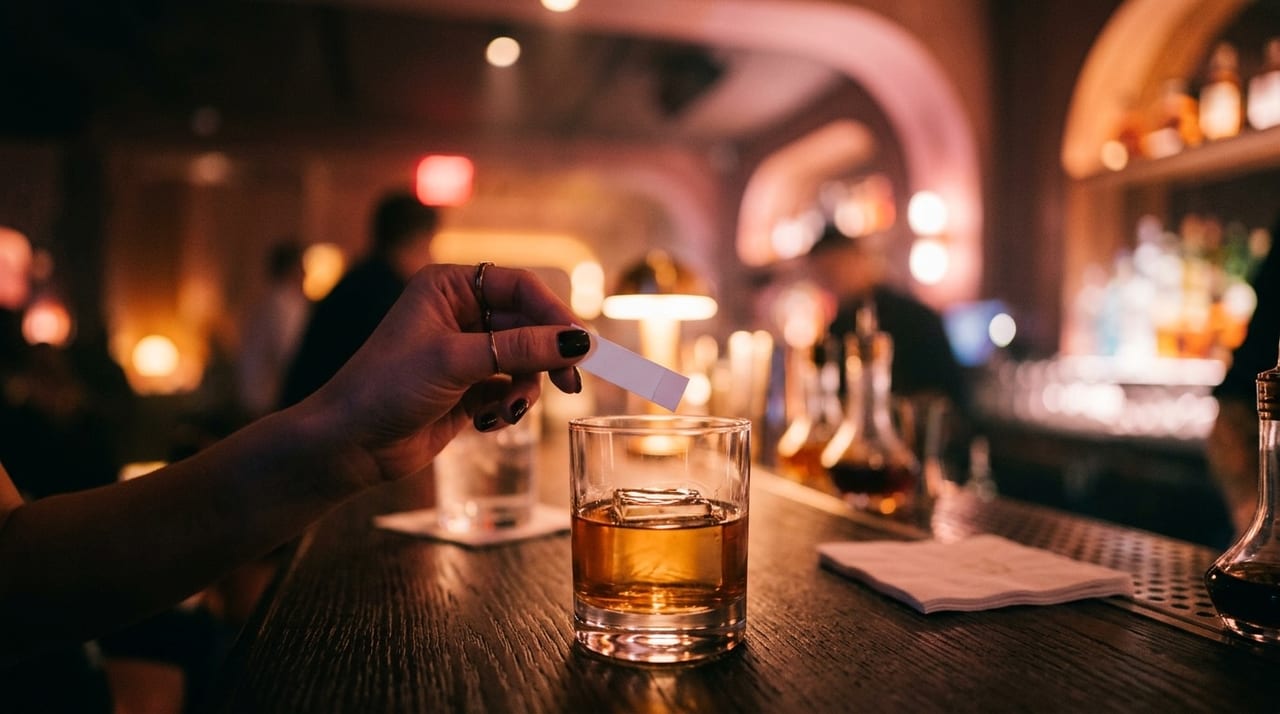
Predatory use of these substances varies by region, availability, and perpetrator preference. A single test that detects only one substance may miss others. DrinkCheck provides comprehensive, multi-drug detection with two drops on the reaction pad—covering 6+ substances, including GHB, ketamine, scopolamine, and cocaine—so you can check your drink for the most commonly implicated substances before you consume it.
Whether you are at a bar, club, party, or traveling, having a portable, clinically validated test gives you a practical tool to reduce risk. Combined with other safety practices—watching your drink, staying with trusted friends, and trusting your instincts—multi-drug detection supports informed, proactive protection.
Predatory Threats Are Evolving
Predatory threats are evolving. DrinkCheck test strips detect GHB, Ketamine, Cocaine, Scopolamine, and other substances in about 15 seconds. Portable, discreet, and clinically validated.
This article is for informational purposes only and does not constitute medical or legal advice. If you suspect you or someone else has been drugged, seek medical attention immediately. In an emergency, call 911.
Last updated: August 2026.