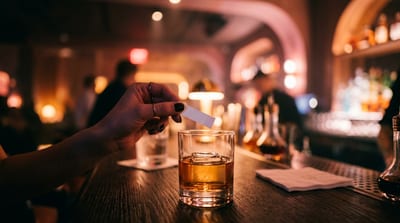
A “roofie test” can mean two different things: a test strip you use on a drink before you sip it, or a medical toxicology test of your urine or blood after you think you were drugged. They answer different questions. If you feel unwell or think you were drugged, don’t wait for any test: call 911.
Feel unwell or worried right now? Get help first
You don’t need a test result to ask for help. Being given an unknown drug is a medical emergency, and you need care right away.
- Emergency: If someone collapses, has a seizure, has trouble breathing or can’t be woken up, call 911 now.
- Not sure what you took or what was in your drink: Call Poison Control at 1-800-222-1222. The advice is free, expert and confidential, 24/7.
- After a possible sexual assault: Contact the RAINN National Sexual Assault Hotline. Call 800.656.HOPE (4673), chat online or text HOPE to 64673. It’s free, confidential and open 24/7, in English and Spanish.
- At the venue: Stop drinking, stay with a friend you trust and tell the bartender or security.
- Don’t wait for a test result before you ask for help. Getting medical care doesn’t mean you have to press charges.
For a full step-by-step plan, see what to do if you think you were roofied.
What people mean by a “roofie test”
There is no single test by that name, because “roofie” is not one specific drug. Someone who says they were roofied could have had any number of substances put in their drink, and forensic toxicologists count dozens of drugs that can potentially be used to facilitate sexual assault. No one test checks for all of them. Looking at or tasting a drink won’t reliably tell you either, because many of the drugs used are usually tasteless, odorless and colorless and leave no visible residue.
What exists instead are two kinds of tests for two different questions. One checks the drink in your hand before you sip it. The other checks your body after you think you were drugged. They don’t replace each other: a drink test says nothing about your body, and a medical test can only look back.
| Drink test strip | Medical toxicology test | |
|---|---|---|
| What is tested | A few drops of a drink | Your urine or blood |
| When | Before you drink | As soon as possible after a suspected spiking |
| Who does it | You, at the bar or party | A hospital, ER or trained examiner |
| What it can tell you | Whether one of the substances on the strip reacts in that drink | Which substances a lab finds in your sample |
| What it can’t | Anything outside its list, or anything about your body | Guarantee a finding: detection depends on timing and the lab |
If you’re trying to make sense of how you felt, see signs and next-day symptoms.
Testing a drink before you sip: what a test strip can and can’t do
A drink test strip checks a few drops of a drink for specific substances before you drink it. DrinkCheck is a single-use test strip that screens for 6+ substances, including:
- GHB
- Ketamine
- Scopolamine
- Cocaine
- Methamphetamine
- Amphetamine
For the first three, see how GHB, ketamine and scopolamine affect the body.
What the result means:
- A negative result does not mean a drink is safe.
- It tests a drink, not a person. It can’t tell you whether you have already been drugged, and it isn’t made for urine or blood.
To use it, place one drop of the drink on the pink and one on the yellow reaction pad (two drops in total), wait about 15 seconds and compare the pads with the guide on the strip. One strip tests one drink sample. It checks the glass in front of you, not a body sample.
If the strip reacts, stop drinking from that glass, tell staff and stay with someone you trust. If you feel unwell, get help and call 911, whatever the strip showed.
Whatever a product is called, whether a “roofie test kit” or “roofie test strips,” it can only react to the substances it was made to detect. Read that list before you rely on a result. The DrinkCheck test strip page lists what ours covers and how to use it.
The “roofied test” at a hospital: urine and blood toxicology
What people call a “roofied test” at a hospital is a toxicology test: a lab checks your urine or blood for substances.
Testing isn’t automatic. The U.S. Justice Department’s national protocol for sexual assault medical forensic exams doesn’t recommend routine testing, but a urine or blood sample may be indicated if you say you were or may have been drugged, have a memory gap you can’t account for, or woke up somewhere without knowing how you got there. So tell staff clearly: “I think I was drugged.”
Timing matters. The protocol calls for samples as soon as possible once you agree to testing, even if you haven’t decided whether to report to police. There’s no guarantee testing will find anything, and how long a drug stays detectable depends on things like the type and amount of drug, your metabolism and whether you have already urinated.
Urine allows a longer detection window than blood, and ideally the first urine you pass is collected. If you can’t wait to urinate, ask a responder or advocate how to collect a sample yourself. GHB, for example, is detectable for up to 6 hours in blood and up to 12 hours in urine.
If the tests are only for your medical care, the hospital lab usually runs them. Samples for a possible criminal case go to forensic labs, and both kinds can be taken at the same time. If you’re thinking about a report, now or later, say so.
You can say no to toxicology testing: under the protocol, your treatment and forensic exam should never depend on agreeing to it. Whatever you drank or took that night, you deserve the same care.
Forensic exam and reporting: your choice, now or later
You can get a forensic exam without deciding to report. A sexual assault forensic exam, or SAFE, sometimes called a “rape kit,” is a medical procedure done by specialists to treat injuries, check for less obvious wounds and collect DNA evidence.
Under federal law (34 U.S.C. § 10449), states that receive certain grants under the Violence Against Women Act must make sure the full out-of-pocket cost of the forensic medical exam is covered, whether or not you take part in the criminal justice process or cooperate with police. Medical care that isn’t part of gathering evidence often isn’t covered by that rule. Ask who will pay for toxicology testing and whether it can go ahead without a police report.
If you have an exam but don’t report, the evidence kit is typically kept for a period set by applicable law or policy and may be destroyed after that unless you report. Ask how long that period is where you are.
RAINN’s hotline can point you to local sexual assault services, medical and legal support, and information about the laws in your state: 800.656.HOPE (4673), online chat or text HOPE to 64673.
The bottom line
A drink test strip is one extra check before you sip. It covers 6+ substances, and a negative result does not mean a drink is safe. A medical test after a suspected spiking is time-sensitive and can’t promise a finding. Help never depends on a test result: call 911 in an emergency, or reach RAINN at 800.656.HOPE (4673).
This article is general information, not medical or legal advice. In an emergency, call 911. Sources checked September 29, 2026.